
A credit card is the cheapest money you will ever borrow if you clear the balance every month, and among the most expensive if you do not. That single fact decides which card on this page is right for you, and it matters far more than any welcome bonus. We verified every rate and every offer below against the issuer's own published terms on 26 August 2026.
Compare the best credit cards for 2026
| Card | Welcome bonus | Annual fee | Regular APR | Apply |
|---|---|---|---|---|
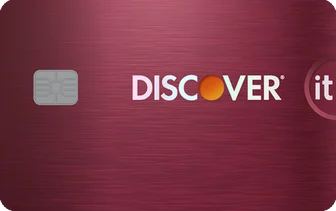 Discover it® Cash BackEveryday cash back Discover it® Cash BackEveryday cash back |
$100 + Cashback Match™ | $0 | 17.49%–26.49% var. | Apply now |
 Chase Freedom Unlimited®Flat-rate earning Chase Freedom Unlimited®Flat-rate earning |
$200 | $0 | 18.24%–27.74% var. | Apply now |
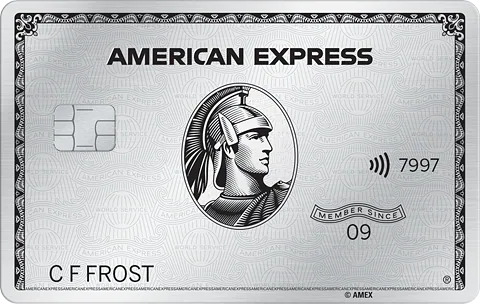 The Platinum Card® from American ExpressFrequent travel The Platinum Card® from American ExpressFrequent travel |
Up to 175,000 pts | $895 | 19.49%–28.49% var. | Apply now |
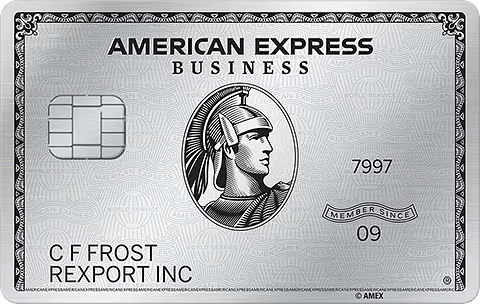 The Business Platinum Card® from American ExpressBusiness travel The Business Platinum Card® from American ExpressBusiness travel |
Up to 300,000 pts | $895 | Pay Over Time (varies) | Apply now |
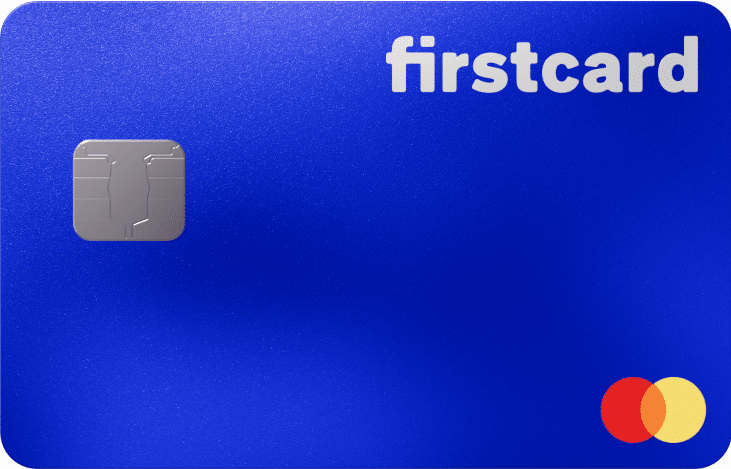 Firstcard® Credit BuilderBuilding credit Firstcard® Credit BuilderBuilding credit |
Up to 1% cash back | From $4.99/mo | 0% | Apply now |
Rates are variable and set by the issuer at approval, so the figure you are offered may sit anywhere in the range shown. American Express welcome offers vary by applicant and you may not be eligible for one.
The best credit cards of 2026
5% back in rotating quarterly categories on activation, and Discover matches everything you earn in year one.
The Cashback Match is the reason this sits at the top. Discover matches all the cash back you earn in your first year, which effectively doubles year-one rewards without you doing anything differently. One thing to expect before you click: Capital One completed its acquisition of Discover on 18 May 2025, so the application page is now branded Discover by Capital One. The card itself did not change. The Cashback Match, the rotating categories and the $0 annual fee all continue as before, and the referral offer is a $100 statement credit for you. The catch is real but manageable: the 5% categories rotate quarterly, they are capped at $1,500 of spending per quarter, and you have to activate them. If you will not remember to do that, the flat-rate card below will earn you more.
- Year-one rewards are effectively doubled by the Cashback Match
- No annual fee
- 0% intro APR for 15 months
- Accepted more widely than it used to be
- 5% categories rotate and must be activated each quarter
- Category earnings are capped
- Weaker acceptance abroad than Visa or Mastercard
Earns on everything with no categories to track, and it pairs with other Chase cards later.
This is the card for people who do not want to think about credit cards. There is nothing to activate and no categories to track. The $200 bonus lands after $500 of purchases in your first three months, which is a low enough bar that most people clear it on normal spending. The 5% rate applies to travel booked through Chase Travel rather than travel generally, so read that one carefully. Its real long-term value is that the points can later be moved to a Chase card with transfer partners, which is worth more than the cash back if you eventually travel.
- No categories to activate or track
- Low $500 spending requirement for the bonus
- 0% intro APR for 15 months
- Points gain value if you add a premium Chase card later
- 1.5% base rate is beaten by the best flat-rate cards
- The 5% travel rate only applies through Chase Travel
- No bonus if you have had this card in the past 24 months
Worth it only if you fly enough to use the lounge access and the travel credits that offset the fee.
The honest framing on this card is arithmetic, not aspiration. The $895 annual fee is real and charged up front. It is offset by statement credits and lounge access, but only if you actually use them, and the credits are broken into monthly and semi-annual chunks specifically because most people do not. Add up the credits you would genuinely use in a year before you apply. If that total does not comfortably clear $895, the Freedom Unlimited above will leave you better off. Welcome offers vary by applicant and you may not be eligible for one.
- Lounge access is the widest of any US card
- 5X points on flights booked directly or through Amex Travel
- Statement credits can more than cover the fee for frequent flyers
- $895 annual fee is charged before you earn anything
- Credits are deliberately awkward to use in full
- $12,000 in six months is a steep spending requirement
- Acceptance is narrower than Visa or Mastercard
The business version of the Platinum, aimed at founders with heavy travel and large monthly spend.
The larger welcome offer is the draw, and so is the absence of a preset spending limit, which matters if your business has lumpy expenses that would blow through a normal credit line. Both come with a condition most people underestimate: $20,000 of spending in three months. If your business does not already put that through a card, chasing this bonus means spending money you would not otherwise spend, which is a loss dressed as a reward. Welcome offers vary by applicant and you may not be eligible for one.
- No preset spending limit suits uneven business expenses
- 5X on flights and prepaid hotels
- 2X on key business categories
- $20,000 in three months is out of reach for most small businesses
- $895 annual fee
- Requires a business, including a sole proprietorship
No hard inquiry and no interest charged, so you can build history without denting your score.
This is a different product from the other four and should be judged differently. You are not chasing rewards, you are buying a payment history. Firstcard reports to all three bureaus, charges no interest because you fund the card yourself, and runs no hard inquiry, so applying cannot cost you points. It also accepts applicants without a Social Security number, which very few issuers do and which makes it genuinely useful for newcomers to the US. Firstcard states that users see an average 52-point increase within three months; that is the company's own figure, not an independent one. Treat the monthly fee as the price of the service and move to a no-fee rewards card once your score supports it.
- No hard inquiry, so applying cannot lower your score
- Reports to all three credit bureaus
- No interest because you fund the card yourself
- Accepts applicants without a Social Security number
- A monthly fee from $4.99 where most starter cards charge nothing
- Up to 1% cash back is well below a real rewards card
- The 52-point claim is the company's own, not independently verified
How to pick the right one
If you want cash back and will not track categories
Take the Freedom Unlimited. The 1.5% base rate is not the highest available, but a rate you actually earn on every purchase beats a 5% rate you forget to activate. The $500 spending requirement is the easiest bonus on this page to clear.
If you will track categories
Take the Discover it. With the Cashback Match, year one is difficult to beat, and the 5% categories are worth real money if you align them with spending you were doing anyway. Set a calendar reminder for the quarterly activation or the advantage disappears.
If you fly often
Consider the Platinum, but do the arithmetic first. Write down the credits you would genuinely use across a year and compare that total to $895. If you are guessing rather than counting, the answer is no.
If you are building or rebuilding credit
Firstcard, and only until you no longer need it. The value is the reporting and the absence of a hard inquiry. Once your score supports a no-fee rewards card, move, because the monthly fee stops being worth paying.
The number that decides whether any of this is worth it
Rewards are the part of a credit card that gets advertised. Interest is the part that decides whether you come out ahead, and it is far larger. Put $1,000 on the Freedom Unlimited and carry it for a year at the middle of its range, roughly 23%, and you pay about $230 in interest. The 1.5% cash back on that same $1,000 is $15. You would be paying $230 to earn $15.
That ratio does not improve at any spending level, because interest scales with the balance exactly as rewards do, only about fifteen times faster. It is why the practical advice is unglamorous and always the same. If you clear the statement balance every month, the rewards are free money and you should pick the card with the best rate for your spending. If you carry a balance, no card on this page is a good deal, and the highest-value move available to you is a 0% intro period used deliberately to clear the debt, or a lower-rate product. Our guide to the best personal loans covers that route, and consolidation at a fixed rate usually beats revolving at 23%.
How we picked
We started from cards we could verify against the issuer's own published terms rather than a comparison site, and we checked every rate on 26 August 2026. Where a figure was not published, we say so rather than estimating it. We did not rank by commission, and the highest-earning link on this page is not the card at the top. We also excluded cards whose welcome offers we could not confirm were still open. American Express offers are the exception we could not fully verify, because they are personalised per applicant, which is why they are written as “up to” throughout.

