
Welcome to our Betterment review. If you’re considering using Betterment as your investment platform, you’ve come to the right place. In this review, we’ll take an in-depth look at what Betterment has to offer, including its investment options, fees, customer service, and more.
We’ll also discuss the pros and cons of using Betterment, so you can make an informed decision about whether it’s the right platform for you. So, let’s dive in and see what Betterment has to offer.
Let’s get started.
What is Betterment?
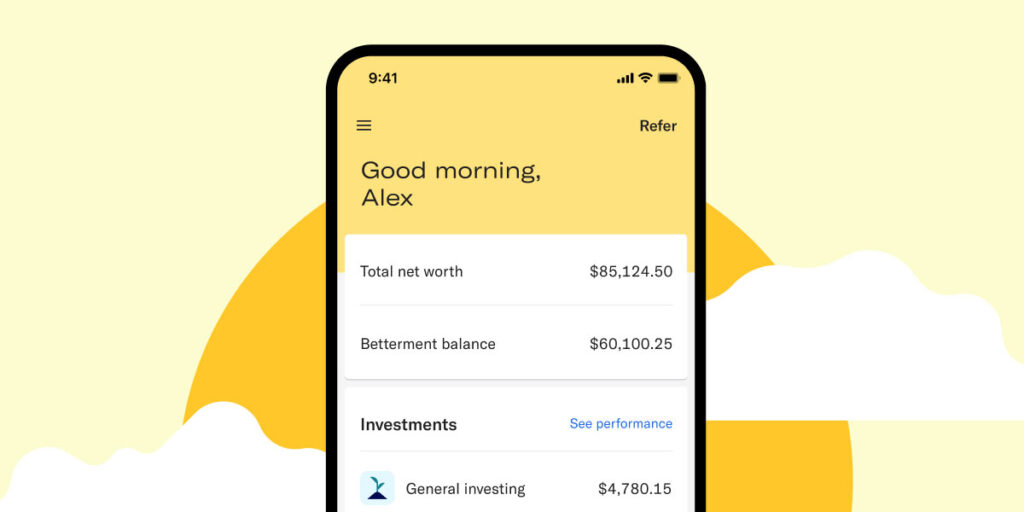
Betterment is an online investment platform that aims to make investing easy and accessible to everyone. It was founded in 2010 and is headquartered in New York City. Betterment is one of the leading robo advisors, reporting more than 1 million customers and over $70 billion in assets under management as of May 10, 2026¹.
Betterment offers a range of investment options, including individual and joint taxable accounts, Traditional and Roth IRAs, SEP IRAs, and Trust accounts. It also offers goal-based investing, which allows you to set specific financial goals, such as saving for retirement or a down payment on a house, and provides personalized investment recommendations based on your goals and risk tolerance.
One of the main benefits of using Betterment is its low fees. Automated Investing costs $5 per month while your investing balance is under $24,000, then switches to a 0.25% annual management fee once you cross $24,000 or set up recurring deposits of at least $200 a month. That is well below what most traditional financial advisors charge. Betterment also includes goal-based planning tools that show whether you are on track for goals such as retirement or a house down payment.
In terms of investment options, Betterment offers a range of low-cost index fund portfolios, socially responsible investing portfolios, and a crypto portfolio built from regulated Bitcoin and Ethereum ETFs. It also added self-directed investing, so you can buy individual stocks and ETFs commission free alongside your managed portfolios.
Overall, Betterment is a solid choice for investors who are looking for a user-friendly platform with low fees and a wide range of investment options. Its goal-based investing feature and financial planning tools make it particularly well-suited for those who are just starting out with investing or who want to take a more proactive approach to managing their finances.

Betterment is one of the pioneers of the robo-advisor approach to investing. After more than a decade in the business, we believe that no other platform offers as much value to its customers as Betterment.
How Much Does Betterment Cost?
Betterment has updated its pricing structure for its investing accounts:
Betterment costs $5 per month for investing balances under $24,000. Once your balance reaches $24,000, that flat monthly fee is replaced by a 0.25% annual management fee.
Keep in mind:
- Balances between $1 million and $2 million are charged 0.15% a year on the portion inside that tier
- Customers with $200 or more in monthly recurring deposits pay the 0.25% annual fee instead of the flat monthly fee, no matter what their balance is
- Balances above $2 million are charged 0.10% a year on the portion above $2 million
Betterment Premium costs 0.65% a year all in. That is the 0.25% Digital base fee plus an additional 0.40% Premium fee, and it carries a minimum balance requirement of $100,000 to invest. Premium adds one-on-one advice from a CFP professional, priority customer support, a securities-backed line of credit, and a 0.25% boost on your Cash Reserve rate. There is no account minimum on the standard Automated Investing plan.
Betterment relies on the modern portfolio theory to offer investment advice thus promoting diversity. The platform also screens companies to invest in according to their social responsibility and you can choose to invest in a company that supports a cause you believe in.
Self-directed investing sits alongside the managed portfolios and carries no management fee at all. Betterment waives its wrap fee on assets held in a self-directed investing account, and trades in US-listed stocks from the S&P 500 and Russell 1000 plus a wide range of ETFs are commission free.
Betterment has various features on its platform and these include goal-based investing, retirement planning tools, automatic rebalancing, automated deposits, and tax-loss harvesting.
Betterment Portfolios
Betterment offers a range of portfolios to suit different investment goals and risk tolerances. These portfolios are built using a combination of low-cost index funds, which track the performance of a particular market index such as the S&P 500.
One of the main portfolio options offered by Betterment is its goal-based portfolios. These portfolios are designed to help you achieve specific financial goals, such as saving for retirement or a down payment on a house. When you set up a goal-based portfolio, Betterment will ask you questions about your risk tolerance, time horizon, and financial goals, and use this information to recommend a portfolio that is tailored to your needs.
In addition to goal-based portfolios, Betterment also offers a range of more general investment portfolios, including:
- Conservative portfolios: These portfolios are designed for investors who are looking for a low-risk option, with a greater emphasis on fixed income investments such as bonds.
- Moderately conservative portfolios: These portfolios are a balance between the conservative and moderately aggressive options, with a mix of stocks and bonds.
- Moderately aggressive portfolios: These portfolios are designed for investors who are willing to take on a higher level of risk in exchange for the potential for higher returns. They have a higher proportion of stocks in the portfolio.
- Aggressive portfolios: These portfolios are designed for investors who are comfortable with a higher level of risk and are looking for the potential for higher returns. They have a higher proportion of stocks and may also include alternative investments such as real estate or commodities.
In addition to these portfolio options, Betterment also offers socially responsible investing (SRI) portfolios, which are built using index funds that focus on companies that meet certain environmental, social, and governance criteria. These portfolios are available in a range of risk levels, from conservative to aggressive.
Betterment Features
Betterment is a comprehensive online investment platform that offers a range of features to help you manage your investments and achieve your financial goals. Some of the key features offered by Betterment include:
- Goal-based investing: Betterment’s goal-based investing feature allows you to set specific financial goals, such as saving for retirement or a down payment on a house, and provides personalized investment recommendations based on your goals and risk tolerance.
- Diversified portfolios: Betterment offers a range of diversified portfolios built using low-cost index funds, socially responsible investing options, and a crypto portfolio built from Bitcoin and Ethereum ETFs. These portfolios are available in a range of risk levels, from conservative to aggressive.
- Automatic rebalancing: Betterment automatically rebalances your portfolio to ensure it stays well-diversified and aligned with your investment objectives. This can help you avoid taking on too much risk or missing out on potential investment opportunities.
- Tax-loss harvesting: Betterment’s tax-loss harvesting feature automatically sells losing investments in your portfolio and replaces them with similar investments in order to generate tax losses that can offset capital gains and potentially lower your tax bill.
- Self-directed investing: Betterment lets you trade individual stocks and ETFs commission free, with no management fee on those balances and a tax impact preview before you place a trade.
- Planning tools: Betterment includes goal-based planning tools that let you set a target, link outside accounts, and see whether your current savings rate puts you on track.
- Mobile app: Betterment has a mobile app that allows you to manage your investments on the go, track your portfolio performance, and access financial planning tools.
- Customer service: Betterment has a team of customer service representatives available to answer questions and provide support by phone, email, or chat.
Pros and Cons
Like any investment platform, Betterment has both pros and cons that you should consider before deciding whether it’s the right fit for you.
Pros of Betterment
- Low fees: Betterment charges 0.25% a year once your investing balance passes $24,000, or $5 a month below that. Either way it lands well under what most traditional financial advisors charge.
- Wide range of investment options: Betterment offers a range of investment options, including individual and joint taxable accounts, Traditional and Roth IRAs, SEP IRAs, and Trust accounts. It also offers goal-based investing, which allows you to set specific financial goals and receive personalized investment recommendations based on your goals and risk tolerance.
- Diversified portfolios: Betterment’s portfolios are built using a combination of low-cost index funds, which are designed to track the performance of a particular market index. This can help reduce risk and provide a more balanced investment approach.
- No account minimum: The standard Automated Investing plan has no minimum balance to open, so you can start with whatever you have.
Cons of Betterment
- Flat fee bites small balances: The $5 monthly charge on balances under $24,000 works out to a high effective rate on a small account. On $2,000 invested, $60 a year is 3% of the balance. Setting up $200 a month in recurring deposits switches you to the 0.25% rate and avoids this.
- No human financial advisors: Betterment is a robo-advisor, which means that it uses algorithms to make investment recommendations rather than human financial advisors. This may not be suitable for investors who prefer to work with a human advisor unless you are on the Premium Plan.
- Human advice is gated: One-on-one access to a CFP professional requires the Premium plan, which means a $100,000 balance and a 0.65% annual fee.
It’s important to carefully consider the pros and cons of Betterment, as well as your own investment goals and risk tolerance, before deciding whether it’s the right platform for you. It’s always a good idea to consult with a financial advisor or conduct your own research before making any investment decisions.
Who is Betterment Best For?
Betterment is an online investment platform that is designed to make investing easy and accessible to everyone. It is particularly well-suited for the following types of investors:
Beginner investors: Betterment is user-friendly and offers a range of investment options, including goal-based investing, which can help beginner investors get started with investing and achieve their financial goals.
Investors who want a low-cost investment platform: Betterment charges 0.25% a year on balances of $24,000 and up, well under what most traditional financial advisors charge. Below that threshold it is $5 a month, and recurring deposits of $200 a month move you onto the percentage rate early.
Investors who want a diversified portfolio: Betterment’s portfolios are built using a combination of low-cost index funds, which are designed to track the performance of a particular market index. This can help reduce risk and provide a more balanced investment approach.
Investors who want planning tools: Betterment includes goal-based planning tools that let you set a target, link outside accounts, and see whether your current savings rate gets you there.
That being said, Betterment may not be the best fit for all investors. The self-directed side covers S&P 500 and Russell 1000 stocks plus a wide range of ETFs, so anyone who wants small-cap names, options, or actively managed funds will hit the edges of what Betterment supports. It’s always a good idea to carefully consider your own investment goals and risk tolerance before deciding whether Betterment is the right platform for you.
Other Betterment Accounts & Features
1. Cash Reserve Account
Betterment offers a Cash Reserve account, a high-yield cash account paying 3.25% APY as of Betterment’s 12/12/2025 rate update. The rate is variable, so it moves. New clients can qualify for a 0.75% boost on balances up to $1 million, which takes the yield to 4.00%. There is no management fee and no minimum balance to maintain, though it takes a $10 deposit to earn the base APY. Cash is swept to program banks, so FDIC coverage runs up to $4 million for individual accounts and $8 million for joint accounts, subject to conditions.
2. Checking Accounts
Betterment also offers a checking account, which is a convenient way to manage your day-to-day expenses. The account has no monthly maintenance fees and no minimum balance requirement, and it comes with a Visa debit card. Betterment reimburses ATM fees and the Visa 1% foreign transaction fee worldwide, and there are no overdraft fees. One thing to be clear on: checking balances do not earn APY. If you want yield on idle cash, that is what Cash Reserve is for.
3. Cash Back Rewards
Betterment Checking includes merchant-funded cash back rewards through the Dosh program. You activate offers from eligible merchants and the cash back lands in your account when you pay with the Betterment Visa debit card. The offers rotate, so what is available to you depends on the merchants running deals at the time.
4. Easy Account Setup
Setting up an account with Betterment is quick and easy. You can open an account online in just a few minutes and start investing right away.
5. Smart Automation Tools and Goal Setting
Betterment offers a range of smart automation tools to help you manage your investments and achieve your financial goals. For example, its Smart Deposit feature automatically invests any excess cash in your account, and its tax-loss harvesting feature automatically sells losing investments in your portfolio and replaces them with similar investments in order to generate tax losses. Betterment also offers goal-based investing, which allows you to set specific financial goals, such as saving for retirement or a down payment on a house, and receive personalized investment recommendations based on your goals and risk tolerance.
6. Betterment Crypto Investing
Betterment’s crypto offering has changed. The original managed crypto portfolios, which held coins directly through Gemini, were discontinued when Betterment terminated its crypto advisory addendum on November 20, 2024. What Betterment offers now is exposure to Bitcoin and Ethereum through regulated ETFs, managed inside the platform with automated rebalancing. You get crypto exposure without holding coins directly or running your own wallet.
Betterment Customer Service
Betterment has a team of customer service representatives available to answer questions and provide support to its customers. You can contact Betterment’s customer service team by phone, email, or chat.
In general, Betterment’s customer service has received positive reviews from users. Many customers report that the company’s customer service representatives are helpful, knowledgeable, and responsive. However, as with any company, there may be occasional instances where customer service is not up to par, and individual experiences with customer service may vary.
In addition to its customer service team, Betterment also offers a range of educational resources on its website, including articles, videos, and a FAQ section. These resources can help you learn more about investing and managing your finances.
It’s always a good idea to consider a company’s customer service when deciding whether to use its products or services. If you have specific concerns about Betterment’s customer service, it may be helpful to read reviews from other users or reach out to the company directly to ask any questions you may have.
Betterment Security
Security is a top priority for Betterment, and the company takes a number of steps to protect the personal and financial information of its customers.
Some of the security measures implemented by Betterment include:
- Encryption: Betterment uses encryption to protect the personal and financial information of its customers. This means that the data is scrambled as it is transmitted between your computer and Betterment’s servers, making it more difficult for unauthorized parties to access it.
- Two-factor authentication: Betterment offers two-factor authentication, which requires you to enter a code that is sent to your phone or email in addition to your password when logging in to your account. This can help prevent unauthorized access to your account.
- FDIC insurance: Cash held in Cash Reserve is swept to program banks, where FDIC coverage runs up to $4 million for individual accounts and $8 million for joint accounts, subject to conditions. Note that FDIC insurance covers bank failure, not investment losses, and it does not apply to your invested portfolios.
- Regular security audits: Betterment regularly undergoes security audits to ensure that its systems and processes are secure.
Overall, Betterment takes a number of steps to ensure the security of its customers’ personal and financial information. It’s always a good idea to carefully consider the security measures in place when deciding whether to use a financial service, and to take steps to protect your own personal and financial information, such as using strong, unique passwords and enabling two-factor authentication.
Betterment Competitors
Betterment is a robo-advisor, which means that it is an online investment platform that uses algorithms to make investment recommendations rather than human financial advisors. Some of the other robo-advisors that are similar to Betterment and could be considered competitors include:
- Wealthfront: Wealthfront is another online investment platform that offers goal-based investing and a stock investing account. It charges 0.25% annually on its Automated Investing Account.
- Charles Schwab Intelligent Portfolios: Schwab charges no advisory fee and no commissions on the standard service, but you need $5,000 to open an account. The Premium tier, which adds unlimited guidance from a CFP professional, costs a $300 initial planning fee plus $30 a month.
- Vanguard Digital Advisor: Vanguard’s robo-advisor charges a gross advisory fee of about 0.20% a year for all-index portfolios, reduced by a revenue credit so the net fee runs closer to 0.15% for a typical portfolio. Enrollment requires at least $100 in a Vanguard Brokerage Account.
- Ellevest: Ellevest is no longer a robo-advisor option. It exited automated investing and transferred those accounts to Betterment in 2025, and now focuses on planning and wealth management for higher-net-worth clients.
It’s important to note that there are many other robo-advisors on the market, and the specific features and fees of these platforms may vary. It’s always a good idea to carefully compare the different options and consider your own investment goals and risk tolerance before deciding which platform is the best fit for you.
Bottom Line: Is Betterment Worth It?
While some investing apps offer free stocks for joining, sometimes having goal-oriented tools and helpful tax strategies should be more appealing to investors. These days you probably are seeing ads for a new robo advisor on the daily. The truth is, they keep on popping up left and right.
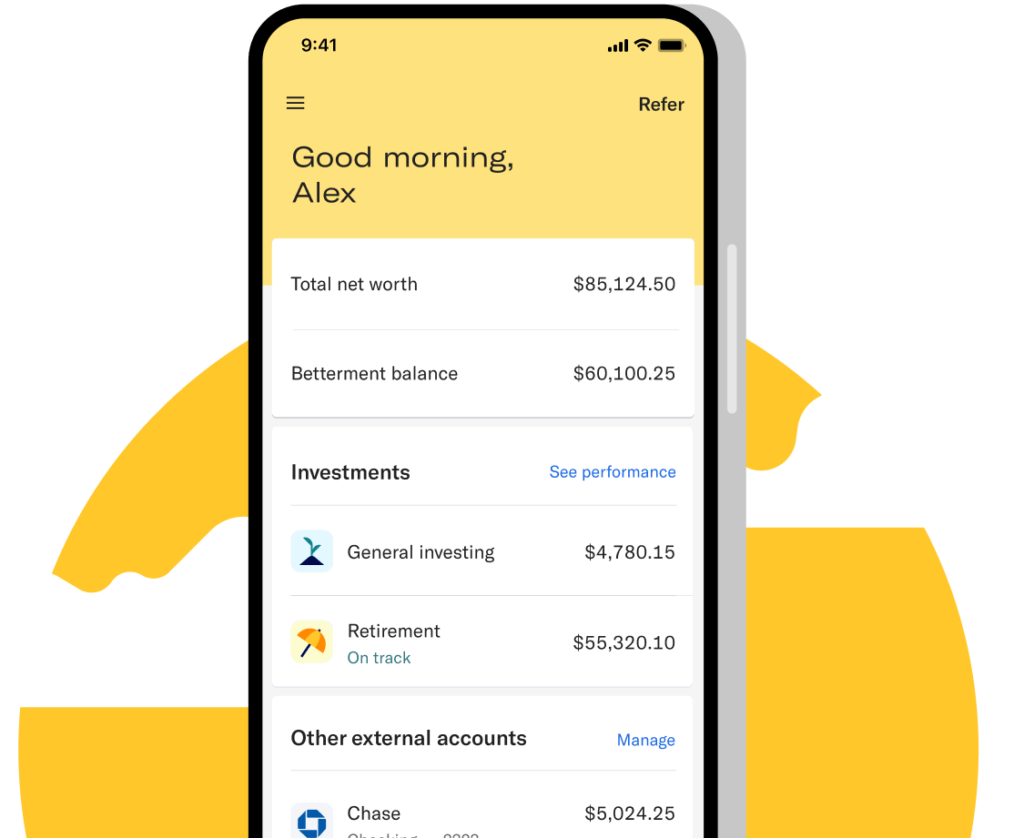
These robo advisors are helpful for consumers as they provide an automated and logarithm-based advising service and act as a financial advisor providing online financial advice online with little or no human consultation.
Sounds complicated. But they make it easy. Ultimately, the decision of whether to use Betterment (or any other investment platform) should be based on a thorough evaluation of your financial situation and goals, as well as a careful comparison of the costs and benefits of different investment options.
Betterment is an online financial advisor built for people who refuse to settle for average investing. People who demand better should look into signing up here.
Bottom line: Betterment has various features on their platform and these include goal-based investing, retirement planning tools, automatic rebalancing, self-directed stock and ETF trading, and tax-loss harvesting. It is one of the top robo advisors that we have reviewed and we do recommend it. Just watch the $5 monthly fee if you are starting with a small balance, and set up $200 a month in recurring deposits to move onto the 0.25% rate instead.
Article Sources
- Betterment. “About Betterment,” customer and assets under management figures, accessed August 2026.
- Betterment. “Pricing,” management fees and tiers, accessed August 2026.
- Betterment. “What is the interest rate on my cash?,” Cash Reserve APY as of 12/12/2025.
- Betterment. “Betterment Premium,” fee and minimum, accessed August 2026.

